
Exhibition design for companies: Planning & realising interactive exhibitions
- Company
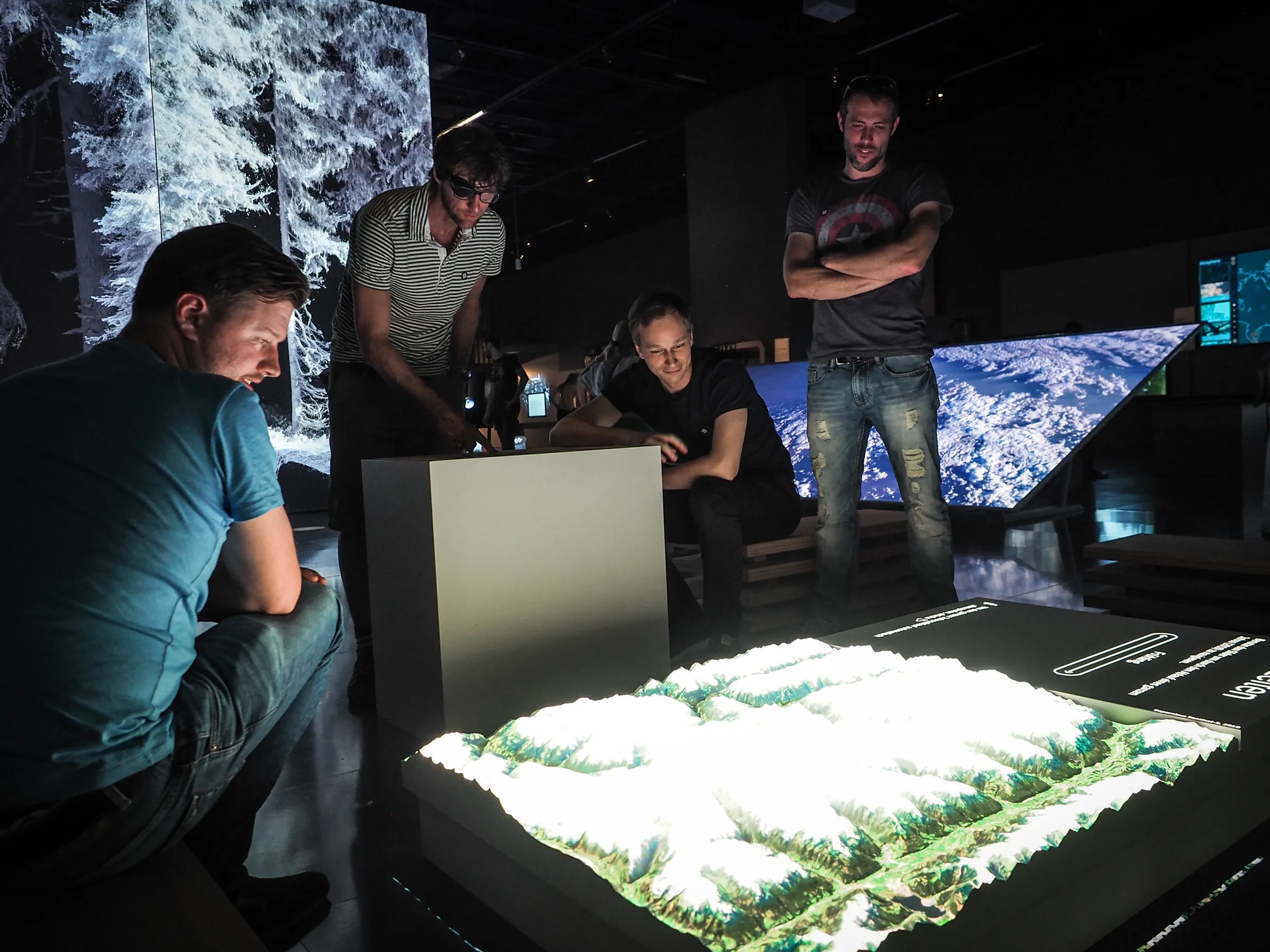
Exhibition design refers to the conception and realisation of spaces in which content is structured, staged and brought to life interactively. In the corporate context, in addition to design, it also includes the areas of interaction, sensor technology, digital content and software.
Classic exhibition design is often understood as a creative discipline. As a question of space, graphics and staging. For companies, however, this understanding falls short. Today, it is no longer just about making content visible. Rather, it is about making it understandable, tangible and interactive. Analogue design alone is not enough for this. What is needed is a system that structures content, guides visitors and uses interaction in a targeted and customised way.
Modern exhibitions are created where content, space, interaction and software are brought together to form a functioning unit.
What is exhibition design in a corporate context?
An exhibition fulfils a different role in a corporate context than in a traditional museum. It is not a place of pure communication, but a working tool. It supports discussions, structures complex content and helps to prepare decisions in a targeted manner. Visitors do not come by chance, but by invitation and with specific expectations. They want to understand, compare and categorise. They are certainly not averse to a particularly innovative and impressive experience. After all, the company's self-presentation should be on a par with its innovative technologies and products.
This means that an exhibition must serve different target groups and perspectives at the same time. A potential customer needs different information than an applicant or a politician. The content must therefore be structured in such a way that it can be scaled in depth and accessed differently depending on the situation.
The exhibition design thus becomes the structuring surface of a complex communication system.
Why many exhibitions don't work
Anyone who regularly visits various exhibitions knows the problem: many exhibitions are impressive at first glance, but do not leave a lasting impression.
The reason for this is not necessarily an inadequate budget or a clumsy design. The decisive factor is that planning is often carried out without a clear content-related logic. Displays, media or exhibits are often discussed too early on without clarifying what content is to be conveyed and how visitors are to be guided through this content.
In practice, this leads to visitors walking through rooms with exhibits without having a clear orientation. The contents stand next to each other instead of building on each other. Individual elements appear isolated and do not influence understanding. In short, most exhibitions fail not because of the budget, but because of the lack of system logic.
In a corporate context in particular, there is a risk of designing an exhibition space that is visually impressive but does not fulfil its actual task of making complex content understandable.
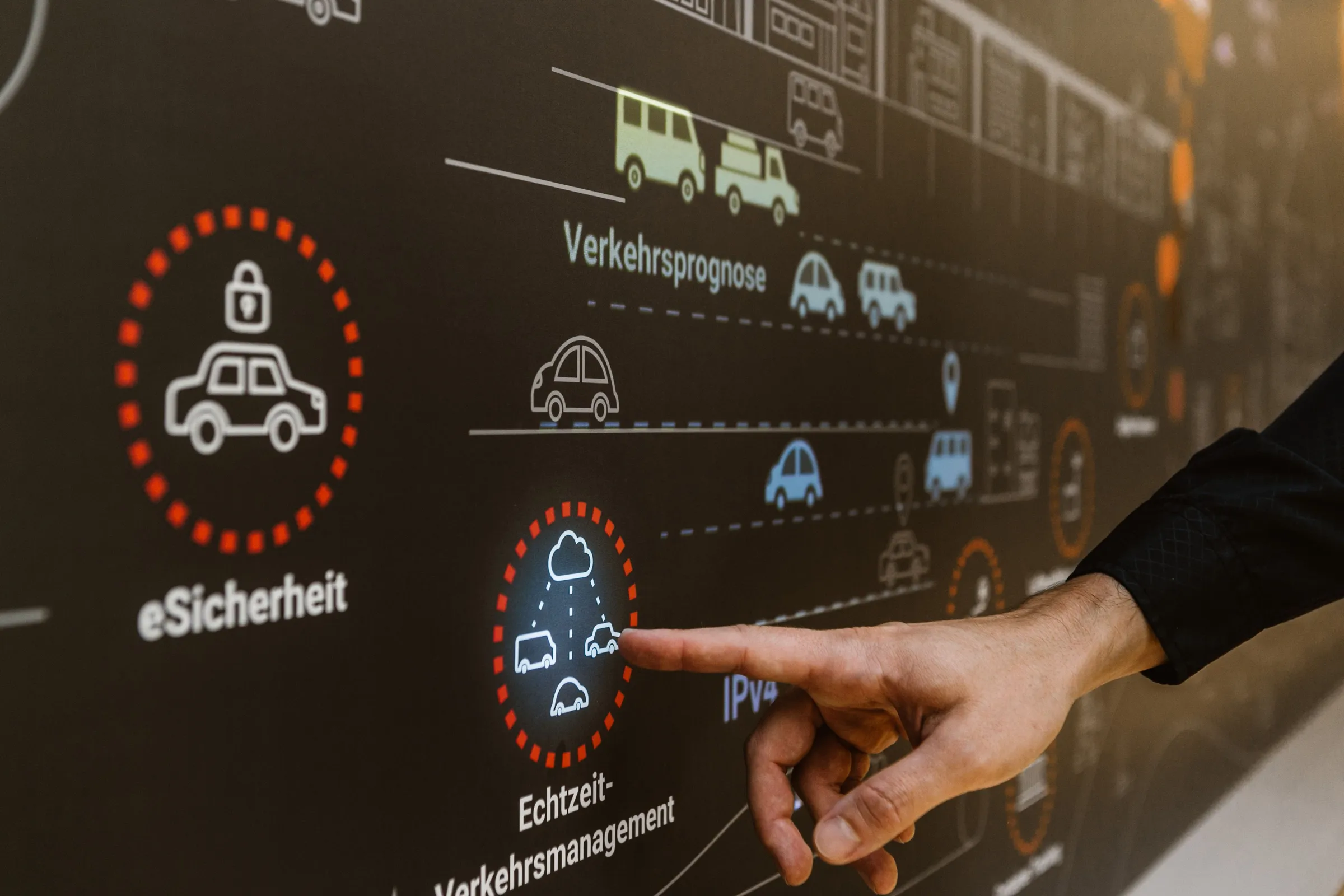
Exhibition design as a system: the decisive building blocks
A functioning exhibition design always results from the interplay of several levels. These interlock and cannot be planned independently of each other.
1. content and narratives
It's not the room that comes first, but the content. The decisive factor is which topics are to be conveyed and how they logically build on each other. Complex content is not minimised, but structured in such a way that it can be accessed step by step. Visitors have the opportunity to orientate themselves along a clear red thread and to delve deeper into individual topics as required.
An example from the chip industry: instead of showing manufacturing processes directly, the exhibition starts with applications such as electromobility or energy. From there, the dramaturgy leads from the function of individual chips to production in the clean room. This creates a clear structure from benefits to technology, making complex content comprehensible.
2. experience logic
The experience logic determines how visitors are guided through the content. It determines at which points decisions are made, which content is visible and when, and how different usage scenarios can be mapped. A well thought-out experience logic ensures that a space can be used for both a guided presentation and free exploration without content being lost.
In practice, this also means that content can be specifically tailored to different groups. With the help of individualised content presets, sales presentations, technical deep dives or HR tours, for example, can each have their own content focus. Content is not created from scratch, but combined and prioritised differently depending on the context. This creates a suitable approach for each target group without having to change the exhibition itself.
3. space and scenography
The space supports this logic. It provides a sense of direction, guides the eye and defines different areas. Through lighting, sightlines and the positioning of exhibits, visitors intuitively understand where they should go and where to find relevant content. The space is therefore not an end in itself, but part of the communication structure.
In open, bright environments such as foyers, orientation is often achieved through clear lines of sight, generous spacing and deliberately placed highlights. The content is visible from a distance, invites low-threshold interaction and integrates into existing flows of movement.
The focus shifts in dark, immersive spaces. Here, guidance is created through light, contrast and staging. Content is specifically emphasised, transitions are deliberately staged and attention is controlled with pinpoint accuracy. The room becomes more of a stage on which content can be experienced sequentially and with greater intensity.
4. interaction and sensor technology
Interactive exhibitions react to visitors. This reaction takes place not only via touchscreens, but also via sensors that recognise behaviour in the room. Proximity sensors, for example, register when people approach an exhibit and then activate specific content. Further levels are triggered by gesture control or physical interaction with objects.
This changes the role of visitors. They do not consume content passively, but actively influence what information appears and when. The content becomes visible depending on the situation and is always in the context of the current usage situation.
In practice, entire zones can be controlled dynamically. When a group enters an area, it is automatically activated. The lights switch on, the screens start up and the content adapts to the group situation. At the same time, neighbouring stations fade into the background or are deactivated to avoid overlapping.
If the group moves on, the contents follow. The previously active zone shuts down while the next station is prepared. This creates a clear, guided dramaturgy in the room without the need for active control. The content appears exactly where it is needed and disappears again when the context changes.
5. digital content and software
Digital content forms the connecting layer between all elements. At individual stations, content is not presented statically, but is displayed dynamically. Using multi-touch systems, projections or screen-based interfaces, it is possible to make content accessible at varying levels of depth. A central system controls this, manages the content, updates it and links it together. The software is not part of the exhibition. It is the exhibition’s operating system. A powerful content management system (CMS) ensures that content can be maintained, expanded and adapted to new requirements over the long term without the exhibition having to be rebuilt.
At the same time, the software controls the entire operation of the exhibition. In practice, this means that complete systems can be started up and shut down on a time-controlled or spontaneous basis. All components start up automatically in the morning and shut down in a controlled manner in the evening. The exhibition can be specifically activated for a presentation, while it switches to an energy-efficient standby mode when not in use.
Because an exhibition consists of numerous networked PCs, displays and media systems, this centralised control is crucial. Without it, a fragmented system quickly emerges, whereas with it, the exhibition becomes reliable, maintainable and efficient to operate in day-to-day business.
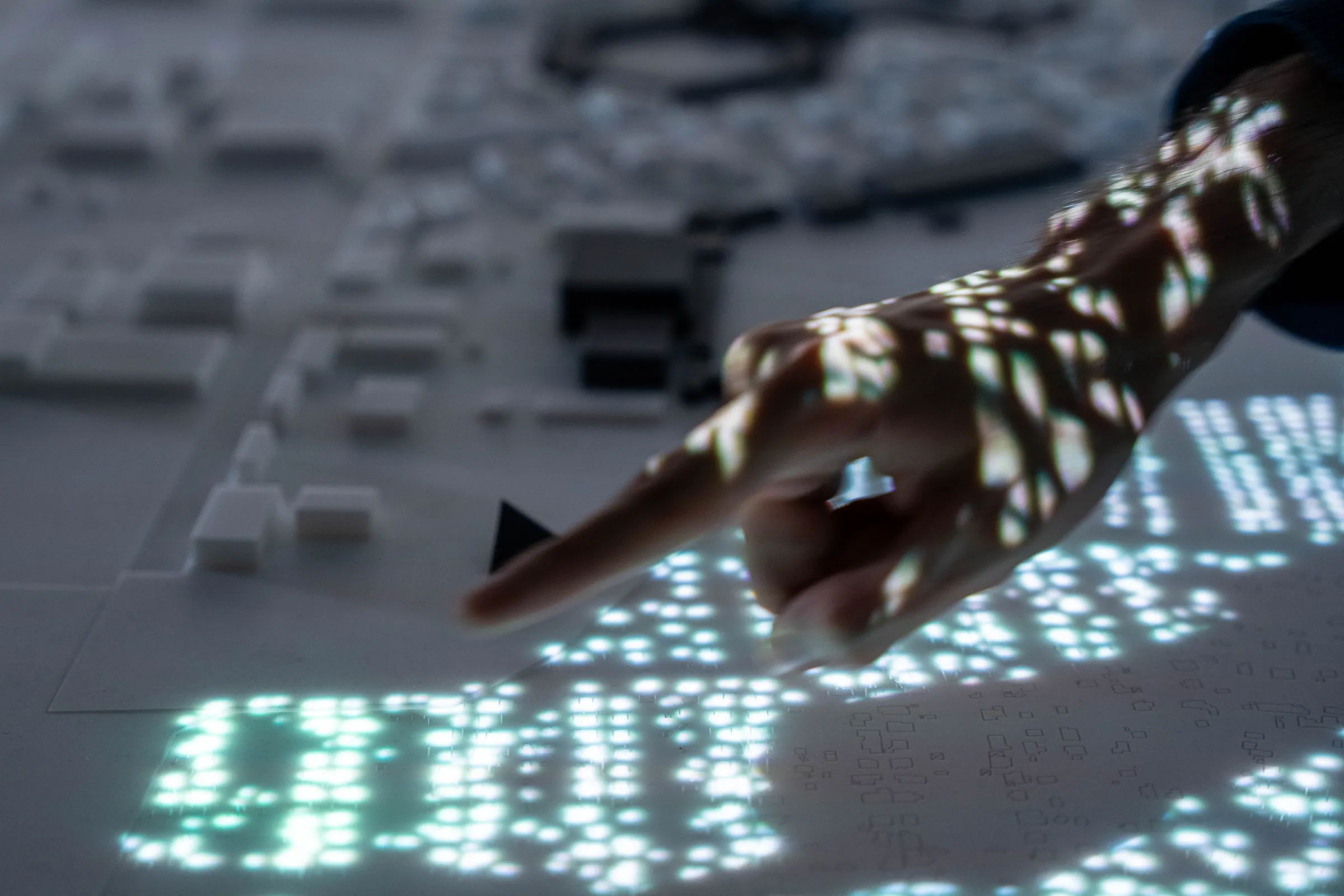
How do you plan exhibition design? The process from concept to operation
Exhibition design is not a linear process. As well as developing a functional system, it always begins with a creative core: the (overarching) concept that determines how the content is experienced. Without a compelling and holistic concept, any exhibition remains fragmented and loses its impact.
The first step is to define the target groups, the communication objectives and the role of the exhibition within the company. Based on this, a content structure is created that defines how the topics are linked together and how visitors are guided through this structure.
In the concept phase, this logic is finally translated into space, interaction and dramaturgy. This creates an interplay of content, movement and staging that characterises the subsequent experience.
It is only in the subsequent planning phase that space, media technology and software architecture are brought together in concrete terms. Systems are defined, interfaces are clarified and the basis for stable operation is created.
The realisation phase shows whether the concept works. Content, technology and space interact for the first time in the real environment and are fine-tuned there. Many decisions can only be evaluated on site.
The process is not yet complete with the opening. The content will be continuously adapted and further developed. The exhibition remains an active system.
Practical examples: Interactive exhibition design in application
Samurai Museum Berlin: Interaction through sensor technology and digital content
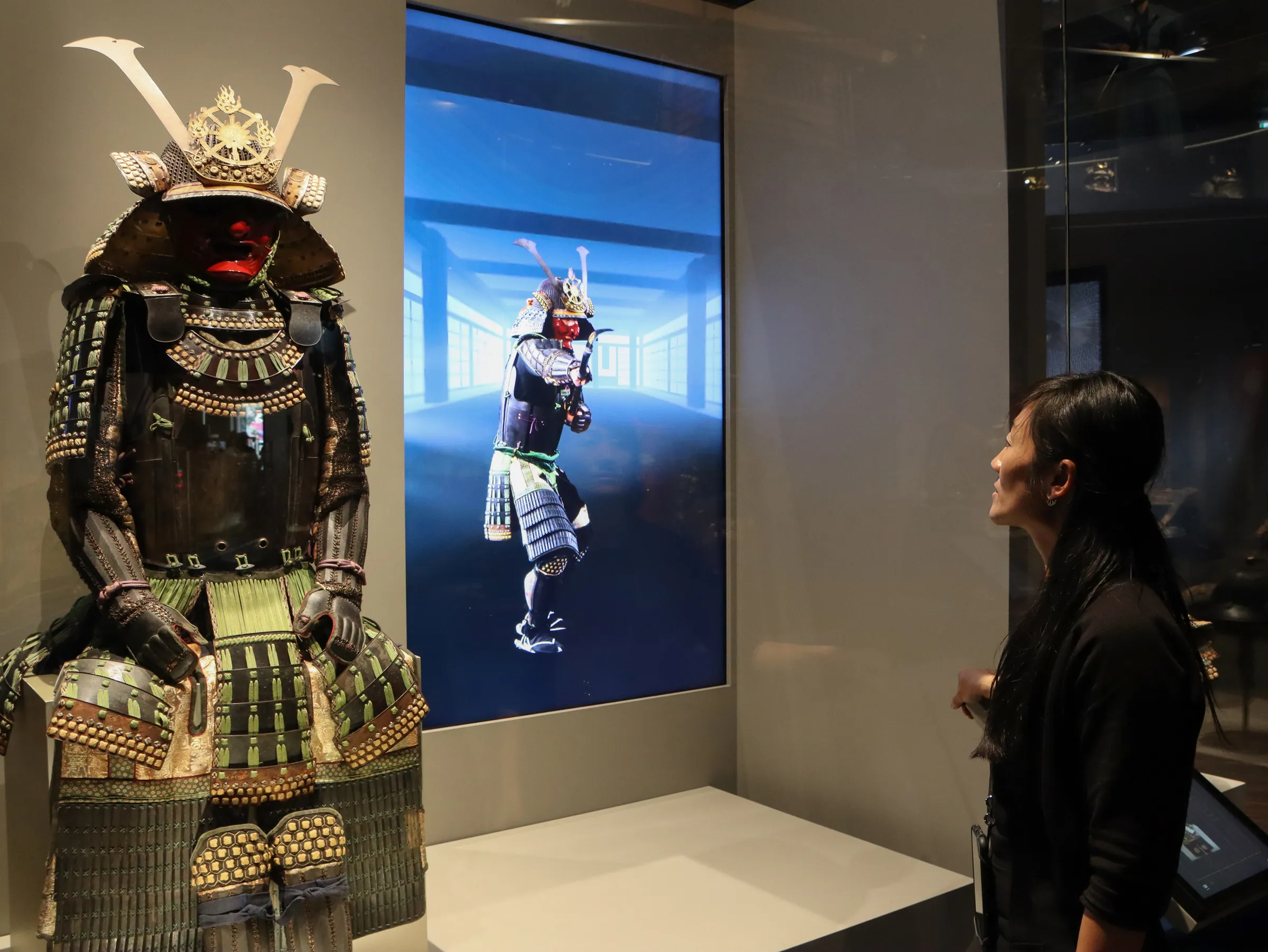
At the Samurai Museum Berlin, it becomes clear just how closely physical exhibits and digital content can be intertwined.
Showcases do not remain static, but react to visitors. As soon as people approach an object, content is automatically activated. Projections, screens or light displays pick up on this movement and add digital layers to the physical exhibit.
Interactive turntables in the display cases are a particularly striking example: Visitors operate a wheel or a rotary knob, causing entire exhibits such as samurai armour to physically rotate. At the same time, digital content is synchronised so that details are visible and explained from different perspectives. The interaction combines a direct haptic experience with context-dependent digital information.
Other interactive stations allow visitors to explore content in greater depth on their own. Multi-touch systems make it possible to call up additional information, explore connections or visualise details that could not be experienced in the physical object alone.
The interplay of sensor technology and software ensures that content is not displayed in isolation, but always appears in the context of the current situation. The exhibition reacts to the visitor and adapts to their behaviour.
Exhibition #Krisenalltag: Digital content as a structuring level
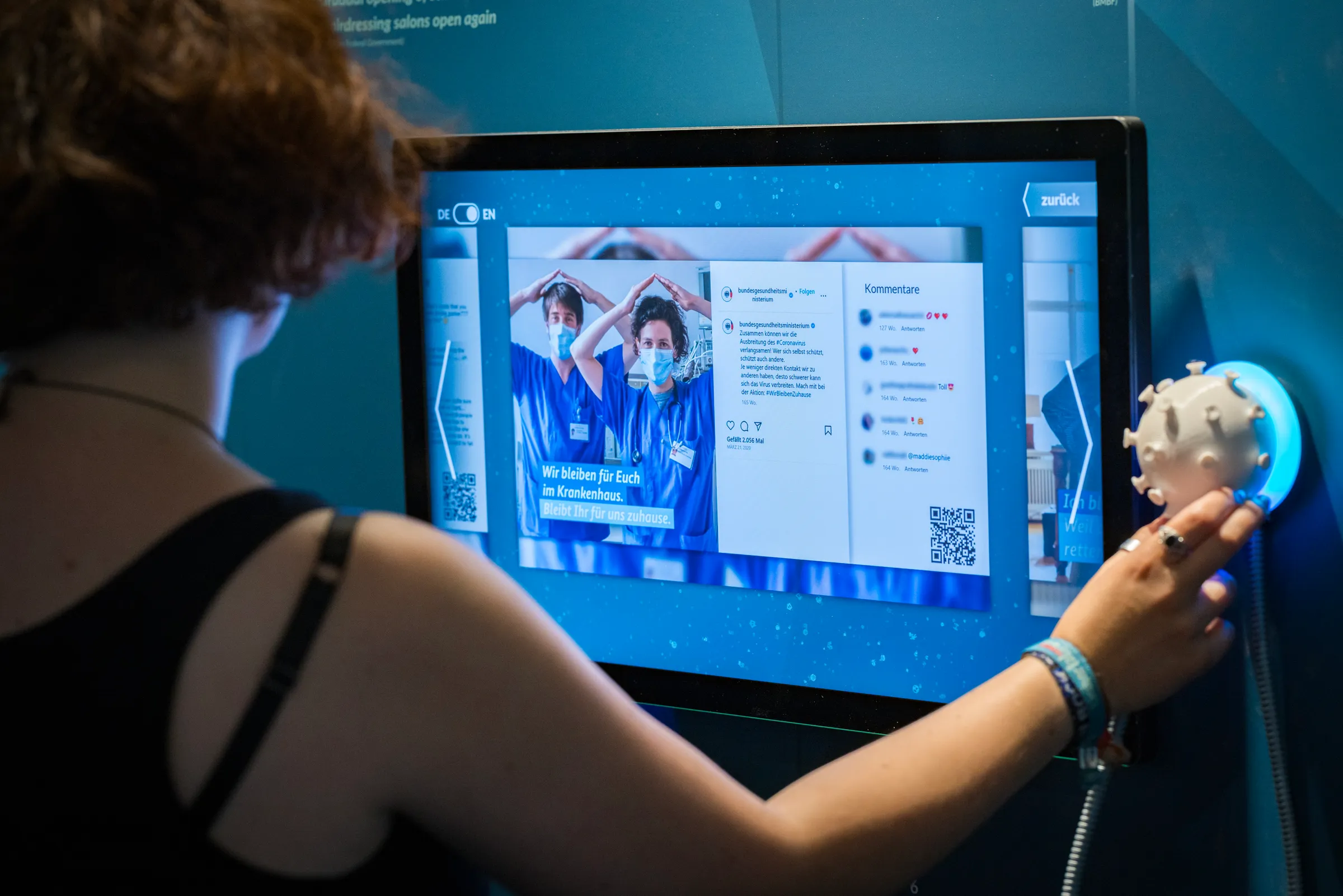
The interactive exhibition “#Everyday Life in a Crisis – Communication during the Pandemic” demonstrates how digital content can itself become the backbone of an exhibition.
Visitors move along a chronological path through the pandemic. This timeline forms the backbone of the exhibition and provides a clear orientation. Around 20 interactive stations are integrated along this timeline, where content can be explored in greater depth.
Multi-touch applications make it possible to explore data, events and communication strategies independently. Content is not presented in a linear fashion, but can be compiled and understood individually.
Multi-touch screens and projections complement this interaction and create visual connections. They condense complex information and make developments comprehensible.
Haus der Wirtschaft Oberösterreich: Space as an interactive media area
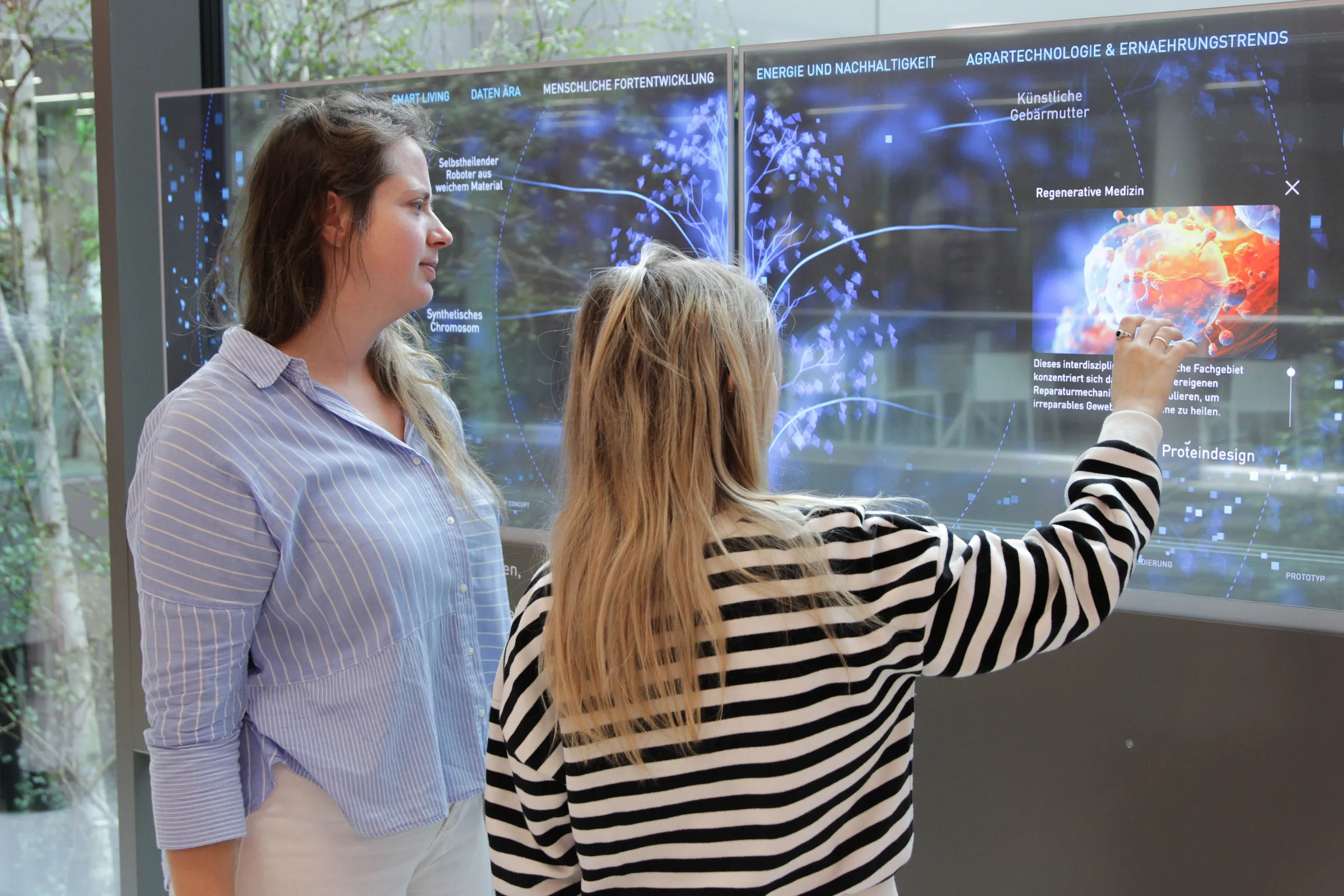
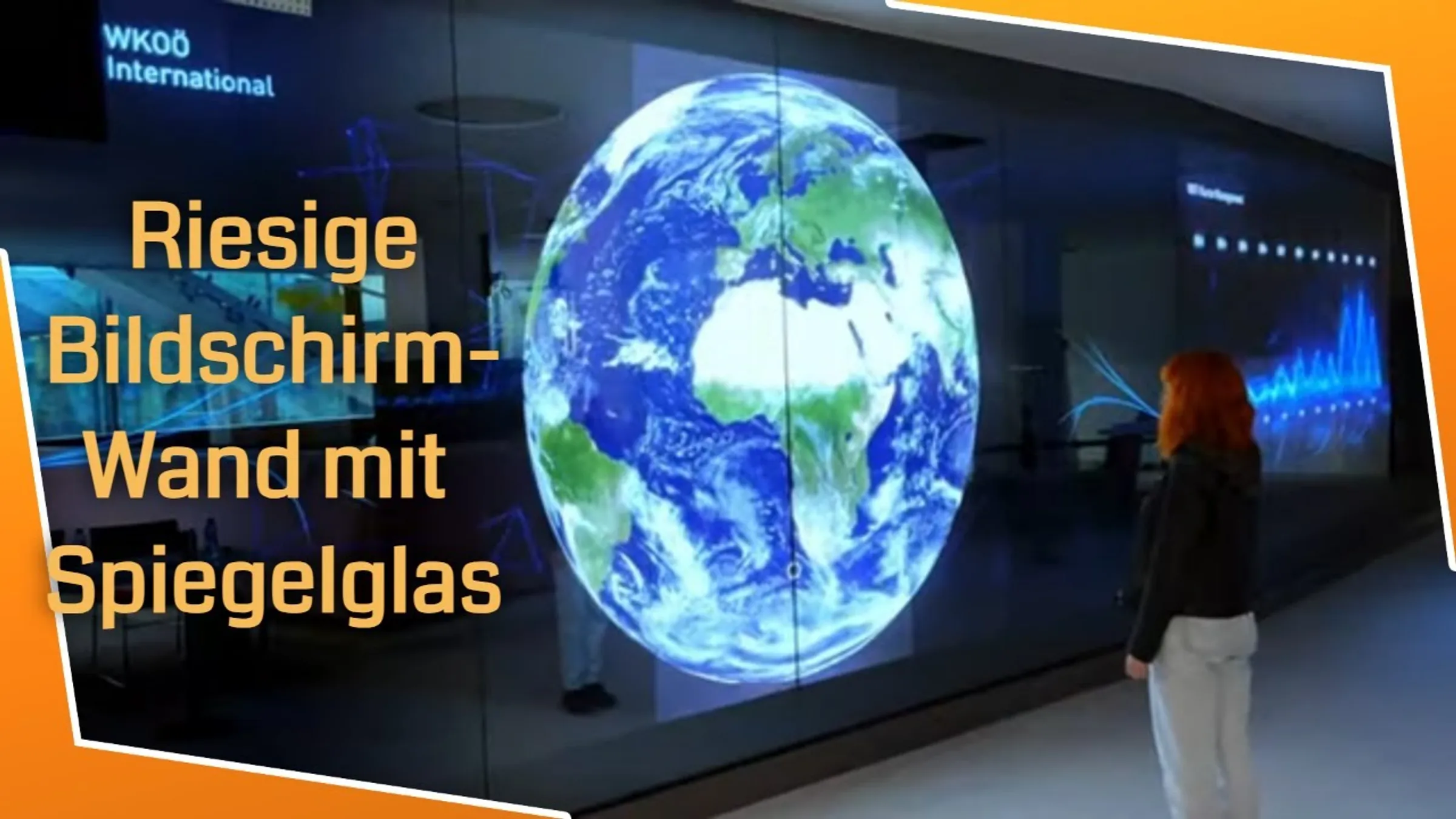
At the Haus der Wirtschaft Oberösterreich, exhibition design is conceived not as a single station but as a continuous space.
A central area is surrounded by mirrored glass surfaces with integrated screens. This combination changes the perception of space and makes visitors themselves part of the staging. Content does not appear isolated on individual displays, but as a coherent media environment.
The interplay between movement and content is particularly striking:
digital content reacts to visitors’ position within the space. As visitors walk past, different information areas are activated, such as along a large-scale world map that visualises global networks and data.
This is complemented by interactive stations such as a digital tree on a transparent screen. Visitors can explore themes and contexts that visually unfold from a central structure by touching them directly.
The decisive difference to classic exhibitions: The space itself becomes the interface. Content is not tied to individual points, but is created through the interplay of movement, position and digital display. This turns the entire space into an active, interactive communication surface.
Dieser Inhalt wird von einem Drittanbieter gehostet. Durch das Anzeigen des externen Inhalts akzeptieren Sie die Nutzungsbedingungen von youtube.com.
Thinking strategically about exhibition design
Many exhibition projects start with spatial ideas or technology. The decisive questions are often asked too late.
In a compact workshop we clarify together:
- what content should really be conveyed
- how different target groups can be guided through the exhibition
- what role interaction, sensor technology and digital content play in the specific case
This will give you a solid foundation before you invest in design or technology. Enquire about a no-obligation workshop with Garamantis now!
Interactive exhibition design: what has changed fundamentally
Exhibition design has changed fundamentally in recent years. New technical possibilities and interactive software open up completely new approaches to communicating content. Whereas static presentations used to dominate, dynamic systems are now emerging that react to use and adapt the content to the situation.
Visitors no longer have to follow a predetermined route. They move freely through the space and access the content individually. Sensors and software record these movements and ensure that content is activated, prioritised or explored in greater depth depending on the context.
The role of the exhibition itself has also changed. It is no longer a self-contained format, but a system that is constantly evolving. Content can be updated, expanded and recombined without the entire exhibition changing. Exhibitions are no longer just analogue. They are interactive.
For which companies is exhibition design worthwhile?
Interactive exhibition design develops its greatest added value in situations in which content or products cannot be communicated using traditional forms of presentation because they require explanation.
This is particularly relevant for companies that need to communicate complex technologies, processes or contexts. This also applies if different target groups, each with their own requirements, are to be addressed or the space is regularly used for discussions, presentations or visits. In other words, if there are different "modes" in which the space is to be used.
Typical fields of application for interactive company exhibitions are
- Industry and mechanical engineering
- Technology company
- Energy and infrastructure providers
In these contexts, exhibition design becomes a tool that structures content and raises conversations to a new level.
Conclusion: exhibition design is system design
Good exhibition design is not created by design alone. It is created through the interplay of content, space, interaction and software. Only when these elements are planned and implemented in an integrated manner is an exhibition created that not only impresses, but also fulfils its dedicated function within the company.
Are you planning an interactive exhibition or a showroom?
Whether new construction, remodelling or further development of existing spaces: we develop exhibitions as integrated systems consisting of content, space, interaction and software. From the initial idea through concept and realisation to long-term operation. Arrange a non-binding initial consultation with Garamantis now!
Frequently asked questions about exhibition design
What is exhibition design?
Exhibition design refers to the conception and design of spaces in which content is structured, staged and communicated. In the corporate context, it is not just about design, but about the interplay of content, space, interaction and software. The aim is to make complex topics understandable and tangible.
What is the difference between exhibition design and scenography?
Scenography primarily describes the creative and spatial presentation of content.
Exhibition design goes beyond this: it also encompasses the structure of the content, the logic of interaction, and the technical and software-related implementation. In a modern context, exhibition design is therefore a multi-layered system, not merely a creative discipline.
How do you plan an interactive exhibition?
Planning does not begin with space or technology, but with the definition of target groups and content. Based on this, an experience logic is developed that defines how visitors are guided through the exhibition. This is followed by spatial planning, interaction concepts, sensor technology and the technical implementation including software and content management system.
What role does interaction play in exhibition design?
Interaction enables visitors to actively explore content instead of just passively consuming it. With the help of technologies such as multi-touch, sensor technology or gesture-based control, content is triggered according to the situation and displayed depending on the context. This significantly improves the understanding and recall of complex topics.
Why is software so important in exhibition design?
Software controls the entire logic of a modern exhibition. It combines content, interactions and media technology and ensures that content can be dynamically displayed and updated. Without software and a content management system, an exhibition remains static and its content quickly becomes outdated.
What does professional exhibition design cost?
The costs depend heavily on the size, complexity and degree of customisation. In addition to the necessary IT hardware, the decisive factor is the proportion of customised design, software development and content production. In practice, permanently installed, customised exhibitions usually start in the low six-figure range and can be significantly higher depending on the requirements.
For which companies is exhibition design worthwhile?
Exhibition design is particularly useful for companies with products that require explanation, complex technologies or multiple target groups. Typical areas of application are industry, technology, energy and the public sector, especially if customers, partners or applicants are regularly received on site.